Rabu, 29 April 2009

Central Java Temple


Ratu Boko Temple, located in Klaten Regency, Central Java

Ratu Boko Temple at evening

Sewu Temple, located near Klaten Regency, Central Java
Dieng Temple

Dieng Temple, located in Wonosobo Regency, Central Java

Pawon Temple, located in Magelang Regency, Central Java

Mendut Temple, located in Magelang Regency, Central Java

Dieng Temple, located in Wonosobo

Kalasan Temple, located in Magelang Regency, Central Java

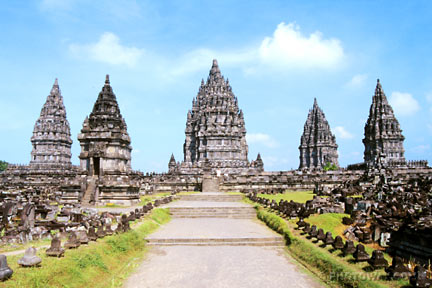
Prambanan at Night
Prambanan Temple, located in Klaten Regency, Central Java


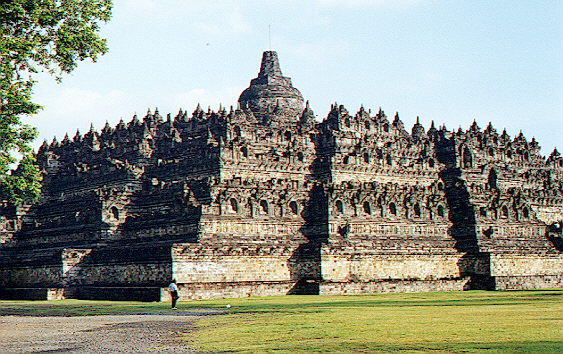
Borobudur Temple

Borobudur Temple, Located in Magelang Regency

Selasa, 14 April 2009

CENTRAL JAVA BATIK TOURISM

SURAKARTA BATIK TOUR

Danar
Hadi Batik Museum
Depart from the hotel to visit Danar Hadi Batik Museum. A wide range of batik design, from time to time, and from west to east are displayed. Experience also the process of batik making, and shop batik till you drop.

Kampoeng Batik Laweyan (Laweyan Batik Village)Kampoeng Batik Laweyan is an old village which has old Dutch architectural buildings. Walking through its narrow alley which is typical of kampoeng in Indonesia will surely impress you. This village is also the center of Batik production. Take a short hour batik course and we can take home our creation as souvenir. Visit house to house to find your favorite batik souvenirs. Bargaining is possible to get a reasonable price.

Kampoeng Batik Kaoeman (Kaoeman Batik Village)Kampoeng Batik Kauman is another batik village. It is a must place to visit especially for batik freak.

Surakarta Batik

PEKALONGAN BATIK TOUR

Pekalongan is known for its batik. The dyed fabric is produced both by hand in small-scale shops, and printed in larger factories. A mainstay of the economy, the industry collapsed during Indonesia's economic crisis in 1998, but it has partially recovered since. Pattern and typical colour of Pekalongan batik have made easily recognized.

On the border of North Java, batik is called "batik pesisiran". Historically, there are three types of batik pekalongan. The first ones, is local batik. It is made by using local style. The pattern doesn't refer to princes' rule, but it takes market progress by using the product sold out quickly.

The second one is "batik encim". It design is originated from China, and can be defined in 3 categories. The pattern is based on "buketan accessories," china culture, and various paintings. The third one is "batik londo" made in Holland whose accessories were a Dutch culture.

These tree batiks are improved each other and it has their own customer. Among them, it is admitted that local batik is oldest even though it is unknown when and who the batik maker is. Generally it had existed before China and Dutch trader came. The glory period of pekalongan batik occurred around 1850: Elyza Van Zuylen product, Oey Soen King, until by the time of World War II, the product of Mrs. Sastromulyono was also known.

Pekalongan batik that had been produced in 1942-1945 appeared after World War II when Japan occupied Indonesia. Thus, Indonesia trade in cooperation with Dutch was over. So did unbleached plain cloth and dye trade. It led the lack of supply. If any, the price was too expensive. In this period, the batik producer made a new one. It was more sophisticated and made by implementing "Padat Karya system (Work full system). The purpose was to make slower and not lose of employees. Unexpectedly, it brought a great impact. Batik Java Hokokai was known then.

1980- 1997 was a critical situation, then they produced silk batik and batik recovered step by step and the customer increased their demands. In 1999, they applied batik in wholesale. It had an intention to access bigger market and to make closer to the customer as well as create pekalongan become "kota batik or batik city". Nowadays, there are around 4 wholesale in Pekalongan: Setono, Gamer, MM, Pantura.


Pekalongan Batik

Central Java Map

Batik Processing

Kamis, 09 April 2009

TOUR DE SINGKARAK, West Sumatera


Foreign Cyclist Will race in "Tour de Singkarak"

The Tour de Singkarak 2009 is the biggest bicycle race in Indonesia that will cover more than 459 kilometers through beautiful cities and lakes in West Sumatera. Running from Wednesday April 29th to Sunday May 3rd 2009, the Tour de Singkarak 2009 will be made up of 4 stages: Padang-Bukittingi (92.3 kms), Bukittinggi-Sawahlunto (85.1 kms), Sawahlunto-Lake Singkarak (90.2 kms), Lake Singkarak-Lake Kembar-Lake Singkarak (188 kms), and award a total prize money of US$60,000. The Tour will surely attract cyclists from home and around the world.

As part of final assessment of the Tour route, there will be a final practice of route escort that will be attended by the Route Supervisory Team (the Marshall), consisting of 25 persons, 2 representatives of route escort and a technical delegate from Union Cycliste Internationale (UCI), Mr. Jamaludin Mahmood.

DR. Sapta Nirwandar, Director General for Marketing, Ministry of Culture and Tourism in a press conference at the Jakarta Sapta Pesona building on Thursday April 2nd said, "The Tour route is now 85% ready, and there will be route final assessment on April 3rd-5th 2009 involving a technical team of the world cyclists organization, the Union Cycliste Internationale (UCI)."

The UCI has included the Tour de Singkarak 2009 in its annual calendar of events. The Tour is expected to attract participation from 15 foreign nations around the world. The committee has so far listed confirmed participation from 14 foreign teams and 10 home ones.

The Tour de Singkarak objective is to provide a memorable sport tourism experience as the Tour combines bicycle race and tourism, in order to inspire the imaginations of champions and excite enthusiasts throughout the event. The Tour is a collaboration between West Sumatera Provincial Government, Ministry of Culture and Tourism, Indonesian Cyclists Association (PB ISSI), and businesses to encourage more tourists, from home and overseas, to come to West Sumatera and take pleasure in the scenic of its landmark attraction, Lake Singkarak


Singkarak Lake

To promote the Tour de Singkarak 2009, the committee plans to hold the Soul of Minangkabau, a music concert of a mixed group of musicians from Jakarta and West Sumatera and headed by Dwiki Darmawan. The committee will also hold other festivities, such as folk party, culinary festival, and mass bicycle riding activity, in which 5,000 participants will ride old bicycles. The ministry has asked cooperation from governments, businesses, individuals and groups of societies to make these pre-Tour promotional events a success. The ministry has also asked cooperation of Metro TV as media partner and Garuda Indonesia as airline partner.

The tourist visits to West Sumatera show a rising trend. The total number of tourists in 2008 was 1,400,000, including 100,000 foreign ones. For the year 2009, the Government of West Sumatera is targeting 1,500,000 tourists.

RACE CATEGORY :

  • 2.2 Category
  • Asia Tour 2009 Constitute combination
  • Registered in UCI (Union Cycling International)

Total Distance 462 Km

Concerned Area :

•Solok Regency•Solok City•Padang City•Padang Panjang City•Agam Regency•Bukit Tinggi City
•Payakumbuh City•Limpapuluh Kota Regency•Tanah DatarRegncy•Sawahlunto City
•SawahluntoSijunjung Regency

West Sumatera Map

Route

Stage 1 : Team Time Trial at Padang City,4.4 km

Stage 2 : Padang - Bukit Tingg, 92 km, 1 Sprint, 2KOMs Min Elev 5m, Max Elev 957M

Stage 3A : Bukit Tinggi - Sawahlunto, 85 km, 1Sprint, 1 KOMs. Min Elev 217m, Max Elev 424M

Stage 3B : Sawahlunto Lake - Singkarak Lake, 93 km, 1 Sprint. Min Elev 93m, Max Elev 435M

Stage 4 : Singkarak Lake - Kembar Lake - Singkarak Lake, 188km, 1Sprint, 2KOMs. Min Elev 382m, Max Elev 157M


Schedule

for further information, click tourdesingkarak.com


Kamis, 12 Maret 2009

PURBALINGGA, the Tourism Magnet of Central Java

Purbalingga is a regency city that located on the foot of Slamet Mount. Seven hours from Jakarta or four hours from Semarang(capital city of Central Java). If you want to try the taste of Indonesian Train, you can try go by train and get off on Purwokerto station. And then you can continuing your journey by bus from Purwokerto to Purbalingga, just 20 minutes.
This regency city has 77,764 hectare areas. And has 18 subdistricts, three of them have attractive tourism place. They are Kutasari, Padamara and Bojongsari.
Bojongsari has one torism place, that is Waterplay Bojongsari or Owabong. This place has 4.8 hectare areas. In this place, we will be welcomed by six swimpool that full of fasilities like waterboom, spilled bucket (Ember Tumpah), stream flow pool (Kolam Arus)and you can also try banana in this swimming pool.
Two kilometres from Owabong, there is Purbalingga Reptile and Insect Park. This park is saved by 841 specieses from 1,831 speciments of insects and one thousand specieses of reptiles. There are may kind of Butterflies, Ladybugs, beetles, and also phytons,king cobras instead crocodiles . But don't worry, these animal are tame enought. If you want to immortalized this moment you can take a photo with that dangerous animal, because no everypeople can do it. You can take a photo easilly if you don't panic and imagine that animal just a puppy. How a strain moment is it!You want suround this park?, it's easy, on this park there are monorail trains that can carry you suround this park.
Four kilometres from Purbalingga Reptile and Insect Park, there is a Pancuran Mas Giant Aquarium on Purbayasa Village, Padamara Subdistrict. On your journey, you can find the beauty greeny village. On this place exhibit many kind of fishes. There are from Asia, Australia, Europe, America instead Africa. Phyranha, is an attractive populated on this place. Not only that, Arapaima Gigas fish also make many visitors are amazed. Because this fish has long 10 metre.
So, enjoy your fauna and educative trip on Purbalingga!.

Purbalingga Reptile and Insect Park

Owabong, Purbalingga Water dreamland


Arapaima fish that exhibit on Purbayasa Aquarium


Central Java from Indonesia map


City map on Central java

Selasa, 10 Maret 2009

KOMODO ISLAND, prove that dinosaurs alive!

The Komodo Islands: Diving & Visit the Dragon


The islands of the Komodo Dragon: Rinca & Komodo Islands are part of the complex of 175 islands (about 90% unhabitant), situated 200 nautical miles east of Bali, between the islands of Flores and Sumbawa. Both above and below the sea Komodo represents a unique range of geological and biological diversity. On shore it is an amazing museum diorama of the Mesozoic era dry tundra and reptilian supremacy. Komodo's symbol of international fame its dragons, the world's largest living lizard.

In the sea it's vibrant color and exotic life will enchant divers and snorkelers alike as endless schools of fish ride the waterways rushing up from deep sea vents, below them the seabed is covered with a thick carpet of florescent corals and marine invertebrates, an underwater photographers paradise.

The waters that surround the island are turbulent and teeming with unparalled marine life. A marine reserve has recently been established and this reserve is largely undocumented and remains unexplored. Komodo National Park was established in 1980. It was declared as a Man and Biosphere Reserve and a World Heritage Site in 1986. KNP includes three major islands - Komodo, Rinca and Padar and numerous smaller islands together totaling 41,000 ha of land contains 132,000 ha of marine waters.

The corals in Komodo National park are pristine, with Mantas, sharks, turtles, dolphins, dugong, many pelagics, to the tiny pygmy seahorses, nudibranchs, frog fish, you name it we've got it. The sites vary from gentle easy coral slopes to heart pounding adrenalin rides, from the warm waters of the Flores Sea in the north to the chillier waters down south in the Indian Ocean, the underwater terrain is so varied with sheer cliff walls, pinnacles, sandy flat bottoms, underwater plateaus, slopes, caves, swim-throughs, channels, all with varying colours, sizes and types of coral both hard and soft.

DIVE SITES:

Bidadari Island
Angel Steps, huge towers of stone, encrusted with hard and
soft corals, covered in nudibranchs, small caves and overhangs make this a very interesting and beautiful site, Dusky sharks, humphead parrot fish are among the bigger creatures we see here. Cathedral Coral, a gentle slope covered with table corals of every colour and schooling fish, a towering spire of coral with a small cave at it's base is the home to some huge lobsters.

Sabolon

  • Sabolon kecil a slope on the east side of this tiny island, with two underwater mounds at the southern end with fields of garden eels and sea pens, schools of round bat fish are often seen coming quite close for some nice photography.
  • Sabolon Besar steep slopes off the southern and western sides of the bigger island, fabulous coral coverage and a good chance of spotting Scorpion leaf fish.
  • Sebayur kecil walls and slopes of every kind of coral you can imagine, wide variety of marine life to be seen at this site, mantas often seen.
  • Tatawa Besar slope with soft coral garden changing to hard coral along the slope, lots of shoaling fish, rainbow runners, fuseliers and often turtles and black tip sharks.
  • Tatawa Kecil (current city) as the name implies, this site is washed by very strong currents, which is why this site is among the many world class sites in the Komodo National Park, schools of pelagic fish patrol the waters, best dived at slack tide.

Batu Bolong
A little further west from current city a small rock outcrop with a hole through it is the surface mark of another world class site, only to be dived at slack tide or with a current not long from stopping or starting to run, these giant slabs of rock which disappear into the depths are an amazing sight to see, covered with every form of marine life and patrolled by giant trevally, Napoleon Wrasse, sharks and turtles with schools of barracuda sweeping in to check out the divers.

Diving the Komodo National Park provides some fantastic conditions:

  • WATER TEMPERATURE: 20 - 28 Degrees Celsius (68-85 F) , cooler water is experienced on the southern sites. Full 3mm wetsuit & hood is recommended. More active people will prefer a sports suit in northern sites.

  • VISIBILITY: 10 - 50M year round. Traditionally clearer water on northern sites.CURRENT: Komodo experiences a strong tidal flow. Not all sites are affected by current. Drift diving is excellent, however during spring tides some sites are impossible to dive. Particular attention is placed on diving the correct sites at the most suitable time to ensure optimum conditions, in accordance with the preferences of the group.
  • NIGHT DIVING: The night diving in Komodo is breathtaking. The sheer beauty, color and diversity of life makes it a must see for all divers.
  • WALLS: There are numerous walls to choose from. Both drift and static wall dives are offered.
  • CANYONS: Huge chasms drop thousands of meters, fringed by extraordinary coral gardens.
  • CRITTERS: Found in all locations, however we do offer special sites for encountering unusual marine species.
  • OTHERS: Seamounts, fringing reefs, gutters, muck, and sandy locations are also found in the archipelago.

Getting There
By daily flights from: Bali - Labuan Bajo/Komodo Airport - Bali (each 1.5 hours)

Where To Stay
You can contact the above tour operators for more information. You can also plan to stay in Bali, and spend a whole day for visiting Komodo Island.


Moving Around
On foot. If you join a tour, the tour will see to everything? including the transportation.

Dining Guide
Traditional restaurants and small cafes.

Souvenir Tips
Wooden carving resembling komodo and other animals.

Other Things to See or Do
  • Fishing
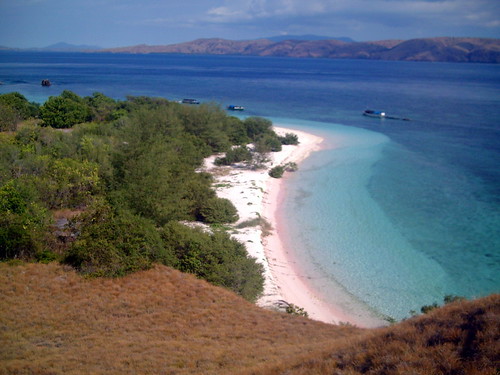
  • Snorkeling in Komodo has one of the world's most famous snorkel sites (Pink Beach)
  • Dragon walks
  • Nature walks
  • Hiking
  • Beach-combing.

Travel Tips

Map of Komodo Island (the red point)

Komodo Island is nominated in New7Wonder, so vote it by clicking this hyperlink

http://www.new7wonders.com/nature/en/vote_on_nominees/?firstselect=6:91

we still waiting your participation on this vote. Thanks for your vote.

Sabtu, 24 Januari 2009

AYER ISLAND, A PEARL OF SERIBU ARCHIPELAGO

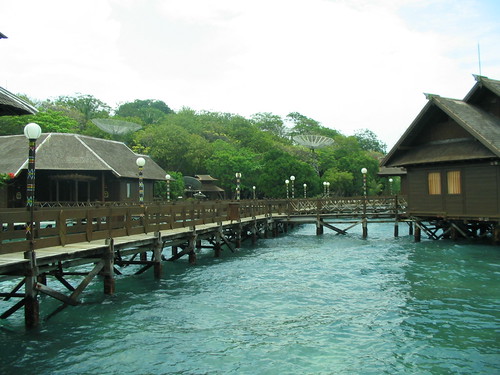
About 20 minutes by speed boat from Jakarta Bay, we can enjoy how shiny this pearl! This island 5,8 hectare areas, located in front of Bidadari Island. This island has many facilities, thee are many luxurious cottage, instead there are float cottage and the Indonesian Heritage, Soekarno(Our first president)’s villa also on there.(Can you believe that?). On this island also has many water sport facilities, there are wave runner, jet ski, water ski, wind surfing, banana boat and canoeing. This island also serve diving agenda with the destination is Kotok Island. Other that, many entertainment in this island there are coffee shop, bar, restaurant, dichotic and Culinary spot. This Culinary spot has many food serve, Indonesian food, Chinese food or Europe food. Enjoy your dinner, you will listen melodious music that you order to the singer. So why not enjoy this one Jakarta!


Panorama of Ayer Island


Seribu Archipelago Map

Jumat, 16 Januari 2009

BUKIT BANGKIRAI, jungle is our heart

Bukit Bangkirai is located 58 km north-west of Balikpapan. Here, we can enter the dense of tropical rain forest. Even though there are many wild life potentials in it, we are hardly to see them in instance.

The main attraction here is the Canopy Bridge which is very famous in East Borneo. It was originally built for biological study of the ecosystem in the canopy of the tropical rain forest. However, it is popular for public to sight-seeing the beauty of tropical rain forest from 30 m / 90 ft above the ground.

You have to walk into the forest trails to get there. Some people see the trails are hard to trek, but you can walk within 15 to 30 minutes to get to The Canopy Bridge (Jembatan Tajuk) . This Bridge on this place that the longness 64 meters that hang and connect 5 big tree that the highness 30 meters. This bridge is the first biggest bridge of Indonesia, second of Asia, and the Eighth of the World. And you will need about 1-2 hours to complete the entire trails and enjoying the dense of tropical rain forest along side the trail.

There are wooden cottages for anyone who like stay over night and enjoying how to spend a night in a tropical rain forest or just camping outside at the camping ground.

For the detail information, you may contact about Bukit Bangkirai and the canopy bridge here : PT. Inhutani I Balikpapan or all them at (62 542) 36066


Canopy Bridge
Bangkirai tree

Bukit Bangkirai map (Tourism map of East Kalimantan)